Skincare Launch Commercials: Why Six, Not One
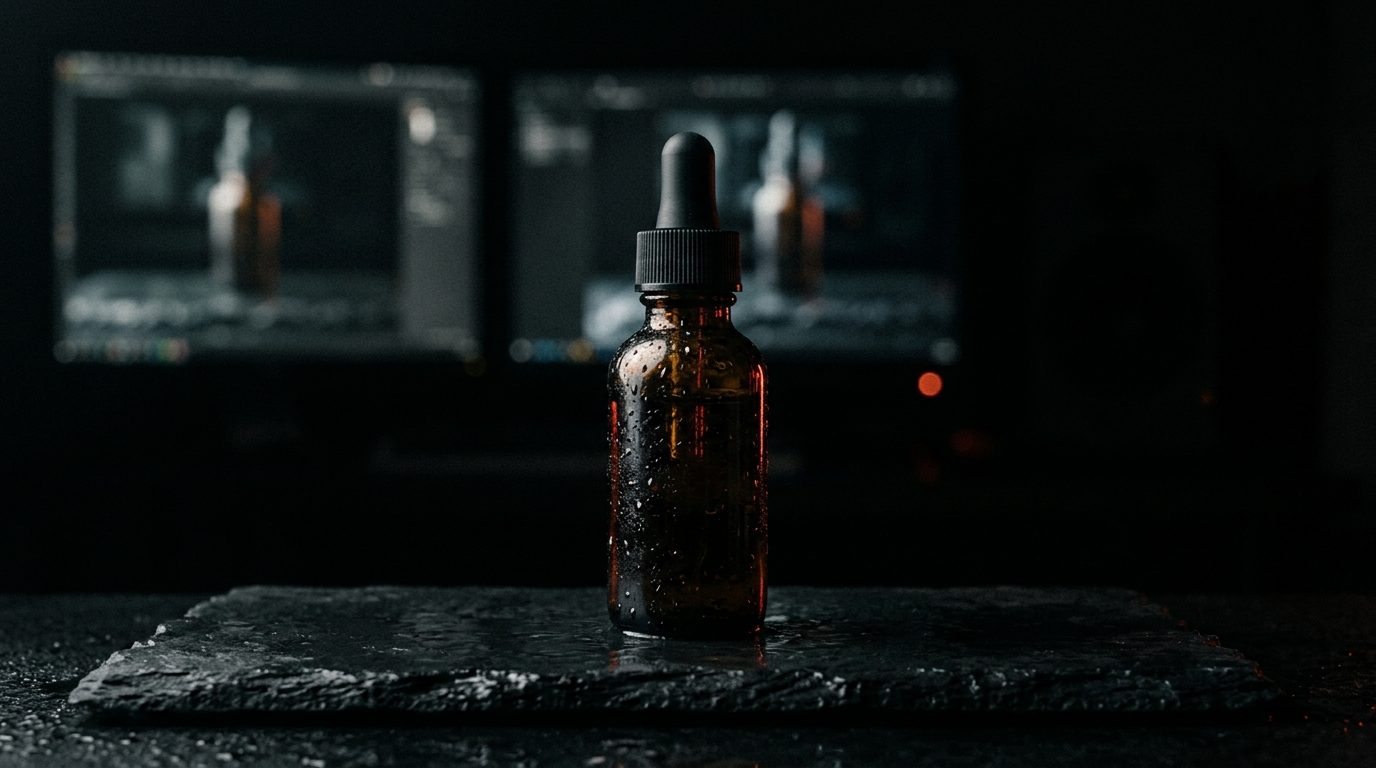
A challenger brand launching a single serum today would not commission one hero film. It would commission a slate. Here is the worked scenario, film by film.
- A challenger skincare brand launching today would commission a slate, not a single hero film: one brief producing six commercials, a hero spot, a retail cutdown, a founder story, an ingredient explainer, a UGC-style spot and a seasonal re-edit.
- It works because production cost is no longer the limiting factor. When a second film does not mean a second shoot day, coverage beats compromise and every channel gets something built for it.
- The discipline moves from picking one idea to sequencing several. Shared product assets and a single grade are what keep six films reading as one campaign.
Skincare launch commercials used to arrive one at a time. One hero film, one edit, one bet, because a second film meant a second shoot day and a second invoice. Remove that constraint and the sensible plan changes shape. What follows is a worked scenario: a challenger brand launching a single serum with six commercials instead of one, and what that slate looks like film by film.
Why would a challenger brand make six commercials instead of one?
Because one film is always a compromise. A hero spot that has to work on connected television, on a product page, in a paid feed and inside a press kit ends up doing none of those jobs properly. Traditional budgets forced that compromise. Nobody chose it.
The old maths was simple. Every extra film meant another crew call, another location, another grade. So brands bought the one film they could defend and then chopped it into shapes it was never designed for. When generation replaces the shoot, the second film costs a fraction of the first, and the fraction keeps falling. Coverage stops being a luxury.
Who is the brand in this scenario?
An invented one, so the plan stays honest. Call it a small independent skincare label with a single hero product, a vitamin C serum, a founder who formulated it herself, a direct to consumer site and one recently signed retail listing. Three people on the team. No agency.
That is the profile the slate has to serve. A brand with a real story, a real proof point, an in-store presence and no budget for a production schedule. Everything below comes from one launch brief and one set of product assets.
What does the six-film slate look like?
Six creatives, each with one job and one home. None of them is a version of another. They share assets, not structure.

Where does each commercial actually run?
A slate only pays off if each film has a confirmed destination before it is made. Assign the placement first, then write to it.
How do six films stay one campaign?
By sharing inputs, not structure. The product stills, the logo, the pack, the founder reference frames, the colour grade and the voice are locked once and fed into every generation. Only the intent changes from film to film.
That is the difference between a slate and six unrelated adverts. A viewer who sees the vertical spot on Monday and the hero film on Thursday should recognise the same glass, the same amber, the same skin tone, the same restraint. Consistency is an asset discipline, not a design review.
What changes in the brief when cost stops deciding?
You stop arguing about which idea survives. Most launch meetings are not creative discussions, they are triage: the founder story versus the ingredient film, the emotional cut versus the offer cut, decided by what the budget will carry. Take the scarcity out and the argument dissolves. You make both and let the market rank them.
That also changes what a weak film means. In a slate of six, the one that underperforms is a result you paid almost nothing for. In a slate of one, it is the launch.
FilmSpoke is the AI commercial store, an AI production studio by Sensa. Browse finished, broadcast-grade creatives, customise one into your brand, and build a slate instead of a single spot. Join the waitlist →
How would you sequence a slate like this?
Not all at once. The founder story and the ingredient explainer go out before the product is buyable, building the reason to care and the reason to trust. The hero film and the retail cutdown land together in launch week, one earning attention and one taking the order.
The UGC-style spot then runs as the workhorse, refreshed whenever performance dips, because a fresh variant is now cheaper than optimising a tired one. The seasonal re-edit waits for the calendar. Same slate, spread across months, each film arriving when it has a job to do.
What this scenario says about the next launch
The limit on a launch slate was never imagination. Every marketing team already knows they need a film for the shelf, a film for the skeptic and a film for the feed. They just could not afford six of them, so they bought one and hoped it stretched.
That constraint is going. The brands that adapt fastest will not be the ones making better single adverts. They will be the ones who start briefing slates, assigning each film one job, and treating the calendar as something to cover rather than something to survive.
A slate is not six productions. It is one approved asset pool directed six ways.
The weakest film in a slate of six is data. The weakest film in a slate of one is the launch.
FilmSpoke is the AI commercial store, an AI production studio by Sensa. Browse thousands of finished, broadcast-grade creatives, customise one into your brand, and take delivery in under 24 hours. Join the waitlist for first access.
The store opens soon.
Join the waitlist. The first 100 members get one creative, a finished broadcast-grade commercial, completely free at launch.
Join the waitlist →