AI Commercial Cost vs Traditional TV Production
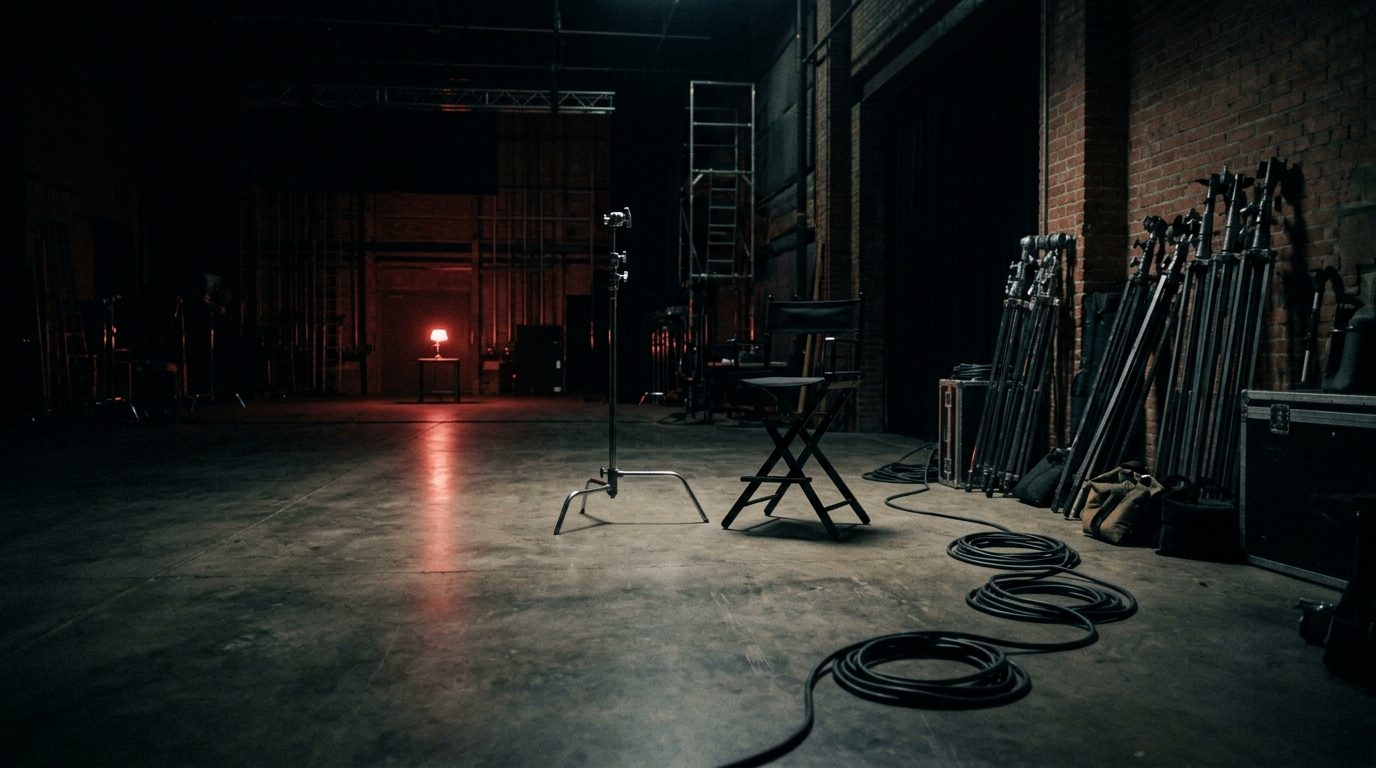
AI does not give you a discount on a traditional shoot. It deletes entire lines from the budget, shrinks others, and leaves a handful untouched. Here is the honest map.
- An AI commercial removes the physical cost base of a shoot entirely: crew day rates, location fees and permits, camera and lighting hire, travel, catering and set build. Those lines do not get cheaper, they stop existing.
- It shrinks, but does not delete, editorial finishing and versioning, because a finished commercial still has to be cut, graded, mixed and delivered in multiple runtimes and ratios.
- It removes nothing from strategy, brand direction, music and voice licensing, legal clearance, quality control and media spend. Budget for those either way.
AI commercial cost is not a discount on traditional TV production. It is a different budget shape. The mistake most brands make when they first compare the two is treating an AI commercial as the same job with a smaller invoice, then getting surprised by the costs that survived the switch. A conventional thirty second spot is mostly a logistics bill with a film attached. Once you see which of those logistics lines are physical and which are creative, the comparison stops being a guess and becomes arithmetic.
Where does the money actually go in a traditional commercial?
Very little of a conventional thirty second budget is spent on the thirty seconds. The bulk of it buys the conditions required to capture them. Development and treatment work comes first, then the production block: director and producer fees, crew day rates across camera, lighting, grip, sound, wardrobe, hair and makeup, and assistant roles that scale with the size of the shoot. Then cast fees and usage buyouts, location scouting, location fees and permits, studio hire and set build, equipment rental, transport, insurance, catering and contingency.
Only after all of that does the money reach post-production: offline edit, online conform, colour grade, sound design, mix, music licence and graphics. Then versioning, which is where budgets quietly inflate, because the same film has to exist in several runtimes and several aspect ratios before it can go anywhere.
The pattern matters more than any single figure. The largest block is almost always the one that has nothing to do with craft. It is the cost of getting people, kit and permission into the same place on the same day.
Which of those costs does an AI commercial remove entirely?
The physical ones. There is no shoot day, so there is no crew call sheet, no location fee, no permit, no studio hire, no set build, no camera and lighting package, no transport, no unit catering and no weather contingency. These are not reduced. They are absent.
That is the honest headline of AI commercial cost. You are not negotiating a cheaper crew, you are deleting the reason a crew was needed. Cast fees change shape too: instead of a shoot fee plus a usage buyout with an expiry date, the performances are generated, so the recurring renewal cost that catches brands two years later is not on the schedule.
What survives from the production block is direction. Someone still has to decide what the film is, and that decision is the part worth paying for.
What does AI not remove from the budget?
This is the part nobody sells you on, so it is the part worth reading twice. Strategy does not get cheaper. The proposition, the audience, the single idea the film has to land: that work is identical whether the footage is captured or generated, and a weak brief produces a weak commercial in either pipeline.
Rights and clearances stay too. Licensed music is licensed music. A recognisable voice, a real product design, a trademark, a claim that has to survive legal review: all of it still needs sign off. Quality control stays, because a finished commercial is judged by a client, a broadcaster or a platform, not by a model. Revisions stay, because notes exist. And media spend, usually the biggest number in the whole marketing plan, is completely untouched by how the film was made.
Why is versioning the line that changes most?
In a traditional pipeline, versioning is a tax. The film is shot for one frame, usually widescreen, and every other format is a compromise negotiated in post. Each runtime is a separate edit. Each aspect ratio is a separate conform, grade and delivery. Each one bills.
Generated production reframes this. The runtimes and ratios are treated as a single deliverable set produced from the same build, not as nine separate finishing jobs stacked on top of each other. That is why the saving on versioning is often proportionally larger than the saving on the shoot itself, especially for brands running the same campaign across broadcast, paid social and retail screens.
FilmSpoke is the AI commercial store: finished, broadcast-grade creatives you customise in clicks. The waitlist is open before launch. Join the waitlist →
How should a brand budget for an AI commercial?
Budget per creative, not per production. A traditional budget is built bottom up from days, people and kit, which is why it cannot be quoted until the concept is locked. A generated commercial is priced as a finished product, so the number is known before the work starts and it moves with the complexity of the creative you choose rather than with the length of the schedule.
Set aside a real allocation for three things: preparing your brand assets properly, licensing anything you do not own, and a round of revisions. Then treat everything you would have spent on the shoot day as freed capital. Most brands should push it into media, or into making more films rather than one, because frequency and variation now cost less than scale used to.
The useful question is no longer how much a commercial costs. It is how many commercials your existing budget can now support.
Does a smaller budget mean a smaller film?
It used to, because budget bought access to craft: better cameras, better crews, better locations, more days. That link is weakening. The expensive parts of a shoot were expensive because they were physical, not because they were creative, and physical scarcity is exactly what generation removes.
What still separates a good commercial from a forgettable one is the idea, the direction and the finishing standard applied at the end. Those are judgement costs, and they are the ones worth protecting when the rest of the budget collapses.
Read the map top to bottom: the removals are physical, the survivors are judgement.
A conventional commercial budget is mostly a logistics bill with a film attached.
FilmSpoke is the AI commercial store, an AI production studio by Sensa. Browse finished broadcast-grade creatives, make one unmistakably yours, and have it delivered in under twenty four hours. The waitlist is open ahead of launch.
The store opens soon.
Join the waitlist. The first 100 members get one creative, a finished broadcast-grade commercial, completely free at launch.
Join the waitlist →